Affiliate Disclosure
This article of Common eye diseases contains affiliate links. If you purchase a product through one of these links, I may receive a commission at no additional cost to you. This compensation does not change the importance of consulting a qualified eye-care professional before making decisions about your vision or health.
Medical Disclaimer
This content of Common eye diseases is provided for general educational purposes and is not medical advice. It is not intended to diagnose, treat, cure or prevent any disease. A dietary supplement cannot replace an eye examination, prescription medicine, laser treatment, surgery or emergency medical care.
Seek urgent care for sudden vision loss, severe eye pain, a sudden increase in floaters, flashes of light, a dark curtain over your vision, eye trauma or rapidly worsening symptoms.
Why Understanding Common Eye Diseases Matters
Healthy eyesight affects reading, driving, working, recognizing faces and maintaining independence. Unfortunately, many serious common eye diseases develop gradually and may not produce obvious symptoms during their early stages.
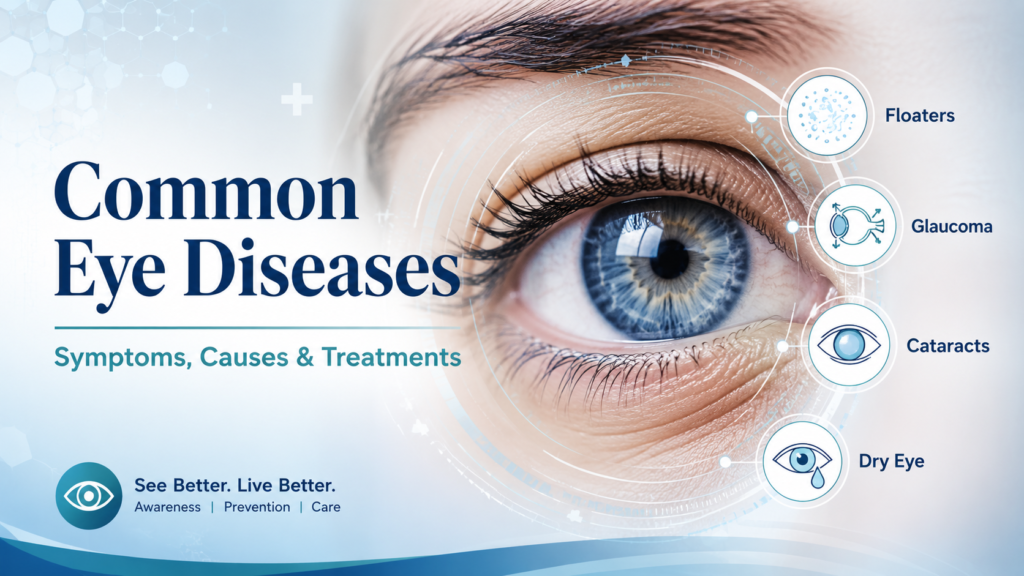
The National Eye Institute lists glaucoma, cataracts, age-related macular degeneration, diabetic retinopathy, dry eye, floaters, pink eye and retinal detachment among the most common eye conditions. It also recognizes refractive errors such as nearsightedness, farsightedness, astigmatism and presbyopia as frequent causes of blurred vision.
A person may think that changing glasses or taking an eye vitamin will solve every vision problem. In reality, eye symptoms can originate from the cornea, lens, retina, optic nerve, tear film, blood vessels or the way the eye focuses light.
That is why a comprehensive dilated eye examination is often more valuable than trying to identify a condition through symptoms alone.
Understanding common eye diseases is essential because many vision problems begin without obvious warning signs. Common eye diseases such as glaucoma, cataracts, diabetic retinopathy and macular degeneration can affect eyesight gradually, while conditions such as retinal detachment may require emergency treatment.
Common Eye Diseases Symptoms and Their Possible Causes
The following guide explains the most common eye diseases, their symptoms, possible causes, established treatments and warning signs that require urgent medical attention.
| Eye symptom | Possible causes |
|---|---|
| Blurry distance vision | Myopia, astigmatism, cataracts or retinal disease |
| Difficulty reading close objects | Presbyopia, hyperopia or incorrect prescription |
| Floating spots or cobwebs | Vitreous changes, posterior vitreous detachment, retinal tear or bleeding |
| Loss of side vision | Glaucoma or retinal disease |
| Cloudy or faded vision | Cataracts |
| Wavy central vision | Age-related macular degeneration |
| Burning or gritty eyes | Dry eye, blepharitis or allergies |
| Redness and discharge | Conjunctivitis, infection or inflammation |
| Flashes of light | Vitreous traction, retinal tear or retinal detachment |
| Eye pain and light sensitivity | Uveitis, corneal disease, acute glaucoma or infection |
| Poor night vision | Cataracts, uncorrected refractive error, retinal disease or vitamin deficiency |
These symptoms can overlap. For example, floaters may be harmless age-related changes, but a sudden shower of new floaters combined with flashes or a dark shadow may signal retinal detachment.
Understanding eye conditions is only one part of protecting your vision. You can also explore our guide to daily habits that may support healthy eyesight, including nutrition, screen-use habits and general eye-care practices.
1. Eye Floaters: Causes, Warning Signs and Treatment
What Are the Most Common Eye Diseases?
Although floaters are discussed alongside other common eye diseases, sudden floaters and flashes require urgent professional evaluation.
Eye floaters look like dots, threads, rings, clouds or cobwebs moving through the visual field. They are often more visible when looking at a bright wall, blue sky or computer screen.
Floaters commonly develop when the vitreous—the gel-like substance filling the eye—changes with age. Small fibers or clumps inside the vitreous cast shadows on the retina, and the brain interprets these shadows as moving spots.
Other possible causes include:
- Posterior vitreous detachment
- Eye inflammation or uveitis
- Bleeding inside the eye
- Diabetic retinopathy
- Eye injury
- Retinal tear
- Retinal detachment
The National Eye Institute advises immediate evaluation when many new floaters appear suddenly, particularly when accompanied by flashes, blurred areas or a curtain-like shadow. These symptoms may indicate a retinal tear or retinal detachment, which can be a medical emergency.
Some common eye diseases progress slowly, while retinal detachment and acute angle-closure glaucoma may require emergency care.
Can eye floaters be treated?
Most ordinary floaters do not require treatment. Over time, they may become less noticeable as the brain adapts or as the floaters move away from the central visual field.
When floaters seriously interfere with vision, an ophthalmologist may discuss procedures such as vitrectomy. However, eye surgery carries risks and is normally considered only after a complete retinal evaluation.
No vitamin, herbal formula or dietary supplement has been established as an emergency treatment for retinal tears or detachments. Never postpone a dilated eye examination while trying an “eye floaters cure” found online.
High-intent search phrases: eye floaters specialist, sudden floaters and flashes, retinal tear treatment, retina specialist near me, eye floaters surgery.
Natural approaches for floaters are frequently discussed online, but claims should be evaluated carefully. Read our detailed article about castor oil, dry eyes and eye floaters to understand the possible uses, limitations and safety concerns.
Watch This Eye Health Video
Watch the video below for additional information about eyesight, common eye problems and daily vision-support habits.
2. Glaucoma: The Silent Threat to the Optic Nerve
Glaucoma is one of the most serious common eye diseases because permanent optic-nerve damage may begin without obvious symptoms.
Glaucoma is a group of diseases that damage the optic nerve. The optic nerve carries visual information from the retina to the brain.
The most common forms of glaucoma may produce no noticeable symptoms at first. As the disease progresses, a person may develop blind spots or lose peripheral vision. Without treatment, glaucoma can cause permanent vision loss.
The National Eye Institute states that glaucoma is diagnosed through a comprehensive dilated eye examination and visual-field testing. Established treatment options include prescription eye drops, laser treatment and surgery.
Common glaucoma risk factors
Risk may be higher among people who:
- Are older than 60
- Have a family history of glaucoma
- Have elevated eye pressure
- Have diabetes or high blood pressure
- Have used steroid medication for extended periods
- Have experienced serious eye trauma
- Belong to certain higher-risk population groups
- Are severely nearsighted or farsighted
An eye-pressure measurement alone is not enough to rule out every form of glaucoma. Some people develop optic-nerve damage even when their pressure is within a statistically normal range.
Can glaucoma vision loss be reversed?
Existing glaucoma treatments can lower eye pressure and help prevent or slow additional damage. They do not usually restore vision already lost from optic-nerve damage. This makes early detection essential.
Acute angle-closure glaucoma warning signs
Go to an emergency department immediately for:
- Intense eye pain
- Sudden blurred vision
- Red eye
- Nausea or vomiting
- Halos around lights
- Severe headache with eye symptoms
Acute angle-closure glaucoma is a medical emergency requiring prompt treatment.
A dietary supplement should never replace prescribed glaucoma eye drops or follow-up appointments with a glaucoma specialist.
High-intent search phrases: glaucoma treatment, glaucoma eye drops, glaucoma surgery cost, glaucoma specialist near me, laser treatment for glaucoma, comprehensive glaucoma eye exam.
3. Cataracts: Cloudy Vision and Cataract Surgery
Cataracts are among the most common eye diseases affecting older adults and can gradually interfere with reading, driving and night vision.
A cataract develops when the normally clear lens inside the eye becomes cloudy. Cataracts often progress gradually and are particularly common with aging.
Common cataract symptoms include:
- Cloudy, blurry or hazy vision
- Faded or yellowed colors
- Glare from sunlight or headlights
- Halos around lights
- Poor night vision
- Frequent prescription changes
- Double vision in one eye
- Needing brighter light when reading
In the early stages, brighter lighting, updated eyeglasses and anti-glare sunglasses may make daily activities easier. However, surgery is the only established way to remove a cataract. During cataract surgery, the cloudy natural lens is removed and usually replaced with an artificial intraocular lens.
Eye vitamins cannot dissolve an established cataract. Be cautious with websites advertising eye drops or supplements as a guaranteed alternative to cataract surgery.
Questions to discuss with a cataract surgeon include:
- Is the cataract affecting driving or reading?
- What type of artificial lens is appropriate?
- What are the benefits and risks?
- What will cataract surgery cost after insurance?
- Will glasses still be needed?
- Is laser-assisted cataract surgery recommended?
High-intent search phrases: cataract surgery cost, best cataract surgeon, cataract surgery near me, premium intraocular lens, cataract symptoms in seniors.
4. Age-Related Macular Degeneration
Age-related macular degeneration is one of the common eye diseases that primarily affects detailed central vision.
Age-related macular degeneration, commonly called AMD, damages the macula—the part of the retina responsible for detailed central vision.
A person with AMD may experience:
- Blurry central vision
- Straight lines appearing bent or wavy
- Difficulty recognizing faces
- Reduced contrast
- A dark or empty area in the center of vision
- Difficulty reading in low light
AMD does not typically eliminate all vision, but central vision loss can make reading, driving and close work difficult. Early AMD may produce no symptoms, which is another reason regular dilated eye exams are important.
Dry AMD and wet AMD
Dry AMD is more common and usually progresses gradually. Wet AMD is less common but can cause faster and more serious central vision loss because abnormal blood vessels grow and leak beneath the retina.
Treatment options depend on the type and stage. Wet AMD may be treated with anti-VEGF injections. Certain carefully studied vitamin and mineral combinations may help some people with intermediate or late AMD.
However, the AREDS and AREDS2 formulas are not general cures for poor eyesight. According to the National Eye Institute, the formulas benefited people with intermediate or late AMD but did not benefit people without AMD or those with early AMD. Nutritional supplements have not been shown to prevent AMD entirely.
Do not assume that every product containing lutein, zeaxanthin or zinc is equivalent to an AREDS2 formula. Ask an ophthalmologist to compare the Supplement Facts label with your diagnosis and medication history.
High-intent search phrases: macular degeneration treatment, wet AMD injections, AREDS2 eye vitamins, retina specialist near me, macular degeneration specialist.
Some people also investigate natural oils for eye comfort. Before trying any home remedy, review our safety-focused guide to castor oil for dry eyes and eye-care safety.
5. Diabetic Retinopathy
Diabetic retinopathy belongs to the common eye diseases that may develop silently before noticeable visual changes occur.
Diabetic retinopathy occurs when diabetes damages blood vessels in the retina. Early stages may have no symptoms, but advanced disease can cause blurred vision, dark spots, floaters, bleeding and permanent vision loss.
The National Eye Institute recommends that people with diabetes receive regular comprehensive dilated eye examinations. Managing blood sugar, blood pressure and other health risks can help prevent or delay diabetic eye damage.
Possible treatments include:
- Anti-VEGF injections
- Laser procedures
- Steroid treatment in selected cases
- Vitrectomy
- Better control of diabetes and blood pressure
Diabetic macular edema can develop when damaged retinal blood vessels leak fluid into the macula. Diabetic retinopathy can also increase the risk of glaucoma and retinal detachment.
A supplement containing chromium or antioxidants is not a substitute for diabetes medicine, retinal imaging or treatment by an ophthalmologist.
High-intent search phrases: diabetic retinopathy treatment, diabetic eye exam, retinal injections, diabetic macular edema treatment, retina specialist for diabetes.
6. Dry Eye Disease
Dry eye is frequently included in discussions about common eye diseases and conditions, although its causes and severity vary considerably.
Dry eye occurs when the eyes do not produce enough tears or when the tears do not function correctly. It can cause irritation and may temporarily affect visual clarity.
Symptoms can include:
- Burning or stinging
- Gritty or sandy sensation
- Redness
- Light sensitivity
- Stringy mucus
- Fluctuating blurred vision
- Watery eyes caused by reflex tearing
- Contact-lens discomfort
- Eye fatigue during screen use
Mild dry eye is commonly treated with artificial tears. More persistent cases may require prescription eye drops, eyelid treatment, warm compresses, punctal plugs or management of an underlying condition. Treatment should be selected according to the cause.
Dry eye can be associated with aging, contact-lens use, low-humidity environments, prolonged screen use, eyelid problems, certain medications, autoimmune disease, thyroid disease and diabetes.
Practical daily measures include:
- Taking regular screen breaks
- Blinking fully and frequently
- Using a humidifier
- Avoiding direct air from fans
- Wearing wraparound glasses outdoors
- Following eyelid-hygiene instructions
- Choosing preservative-free artificial tears when advised
- Staying adequately hydrated
Not every nutritional supplement marketed for dry eye has strong clinical evidence. For example, a large NEI-funded trial found that oral omega-3 supplements were no better than placebo for relieving dry-eye signs or symptoms in the studied participants.
High-intent search phrases: best dry eye treatment, prescription eye drops for dry eye, dry eye specialist near me, artificial tears, chronic dry eye treatment.
7. Refractive Errors and Blurry Eyesight
Refractive errors occur when the eye does not focus light correctly on the retina. The four common types are:
Myopia
Myopia, or nearsightedness, makes distant objects look blurry while close objects may remain clear.
Hyperopia
Hyperopia, or farsightedness, can make near vision difficult, although severe hyperopia may also blur distance vision.
Astigmatism
Astigmatism results from an irregular curvature of the cornea or lens. It may cause blurred or distorted vision at multiple distances.
Presbyopia
Presbyopia is the age-related reduction in the ability to focus on close objects. It commonly becomes noticeable during middle age.
The National Eye Institute identifies blurred vision as the most common symptom of refractive errors. Treatment can include prescription eyeglasses, contact lenses or refractive surgery in suitable candidates.
A vitamin supplement cannot reshape the cornea or replace the optical correction provided by glasses, contact lenses or LASIK.
People considering LASIK eye surgery should receive a detailed corneal and eye-health evaluation. Conditions such as keratoconus can increase the risk of complications from refractive surgery.
High-intent search phrases: LASIK eye surgery cost, eye exam cost, contact lens exam, prescription glasses, vision insurance, blurry vision treatment.
8. Retinal Detachment
Retinal detachment occurs when the retina separates from its normal position. Without prompt treatment, retinal cells may lose access to the oxygen and nutrients they need, creating a risk of permanent vision loss.
Warning signs include:
- A sudden increase in floaters
- Flashes of light
- A dark curtain or shadow
- Sudden loss of peripheral vision
- Rapidly worsening blurry vision
Retinal detachment is a medical emergency. Treatment may include laser therapy, freezing treatment or surgery, depending on the type and extent of the detachment.
Do not take a supplement and “wait to see” whether these symptoms improve.
9. Pink Eye and Other Causes of Red Eyes
Pink eye, or conjunctivitis, causes inflammation of the tissue covering the white part of the eye and the inside of the eyelids.
It may be caused by:
- Viruses
- Bacteria
- Allergies
- Chemical irritation
- Contact-lens problems
Symptoms can include redness, tearing, itching, discharge, crusting and irritation. Treatment depends on the cause. Antibiotic eye drops do not treat viral or allergic conjunctivitis, and unnecessary antibiotic use should be avoided.
See a doctor promptly when redness is accompanied by significant pain, light sensitivity, reduced vision, severe discharge, contact-lens use or symptoms that do not improve.
Avoid sharing towels, eye cosmetics, pillowcases or contact-lens equipment when an infectious cause is possible.
10. Blepharitis and Eyelid Inflammation
Blepharitis is inflammation along the eyelid margins. It may cause:
- Flaking around the eyelashes
- Burning
- Itching
- Red eyelids
- Gritty sensation
- Watery eyes
- Dry-eye symptoms
Management may involve warm compresses, careful eyelid cleansing and medication when prescribed. Some people have recurrent symptoms and need a consistent eyelid-hygiene routine.
Persistent eyelid symptoms should be evaluated because blepharitis may overlap with dry eye, skin conditions or meibomian-gland dysfunction.
11. Keratoconus and Corneal Disorders
The cornea is the transparent front surface of the eye. Corneal disease, infection, injury or abnormal shape can interfere with the way light enters the eye.
Keratoconus develops when the cornea gradually thins and bulges outward into a cone-like shape. This can cause:
- Increasing astigmatism
- Distorted or ghosted images
- Light sensitivity
- Frequent prescription changes
- Difficulty seeing at night
- Problems wearing ordinary contact lenses
Treatment may include specialized contact lenses, corneal cross-linking or, in advanced cases, corneal transplantation. Corneal cross-linking is designed to strengthen the cornea and reduce progression.
Rapidly changing astigmatism should not automatically be blamed on “weak eyesight.” A proper corneal examination is important.
12. Uveitis
Uveitis is inflammation inside the eye. Symptoms may include pain, redness, blurry vision, light sensitivity and floaters.
It may be associated with infection, autoimmune disease or other inflammatory conditions. In some cases, the cause remains unknown.
Untreated uveitis can lead to vision loss. Prescription anti-inflammatory eye drops are commonly used, but treatment varies according to the location, cause and severity of inflammation.
People with eye pain and light sensitivity should avoid self-diagnosing the condition as simple eye strain or dry eye.
13. Amblyopia or Lazy Eye
Amblyopia is reduced vision that usually develops in one eye during childhood because the eye and brain do not work together normally.
It may be related to:
- Eye misalignment
- A large prescription difference between the eyes
- Cataract or another obstruction during visual development
- Uncorrected refractive error
Treatment may include eyeglasses, patching the stronger eye or prescribed atropine drops. Early diagnosis is valuable because the visual system is still developing during childhood.
Children may not report blurred vision because they assume everyone sees the same way. Routine pediatric vision screening and complete eye examinations are therefore important.
Changes in the appearance or comfort of the eyes may sometimes occur alongside wider health concerns. Learn more in our article discussing eye changes and their possible relationship with liver health. This information is educational and should not be used for self-diagnosis.
When Should You See an Eye Doctor?
Schedule an eye examination when you experience any Common Eye Diseases such:
- Persistent blurry vision
- Frequent headaches associated with focusing
- Difficulty reading or seeing road signs
- Increased glare when driving at night
- Eye strain that does not improve
- Chronic dryness or redness
- Repeated prescription changes
- A family history of glaucoma
- Diabetes
- New distortion in central vision
Seek immediate care for:
- Sudden vision loss
- Sudden floaters and flashes
- A dark curtain over vision
- Severe eye pain
- Eye injury
- Chemical exposure
- Red eye with light sensitivity
- Sudden double vision
- Neurological symptoms accompanying visual changes
When searching online, terms such as “ophthalmologist near me,” “retina specialist near me,” “emergency eye doctor” or “glaucoma specialist near me” may help locate appropriate services. Online information cannot determine how urgent an individual case is.
Daily Habits That Support Healthy Vision
Regular examinations remain one of the most valuable ways to detect common eye diseases during their early stages.
1. Get regular comprehensive eye examinations
An eye chart tests visual sharpness, but a full examination may also assess eye pressure, retinal health, optic-nerve appearance, eye movements and other structures.
2. Control diabetes and blood pressure
High blood sugar and vascular disease can damage small blood vessels in the retina. Follow the treatment plan provided by your medical team.
3. Protect your eyes from ultraviolet exposure
Wear sunglasses that provide appropriate UVA and UVB protection. A wide-brimmed hat can provide additional shade.
4. Stop smoking
Smoking is associated with multiple health risks, including conditions affecting blood vessels and eye tissues. Ask a healthcare professional about evidence-based cessation support.
5. Eat a varied, nutrient-dense diet
Build meals around vegetables, fruits, whole grains, legumes, nuts, seeds and appropriate protein sources. Dark-green leafy vegetables provide carotenoids, while fish and other foods can contribute nutrients used throughout the body.
Food and supplements support nutrition; they do not replace disease-specific eye treatment.
6. Use screens more comfortably
Try the 20-20-20 approach: approximately every 20 minutes, look about 20 feet away for around 20 seconds. Adjust text size, reduce glare and remember to blink.
7. Use contact lenses safely
Wash and dry your hands, replace lenses on schedule and never use water as a substitute for approved contact-lens solution. Remove lenses and contact an eye-care professional if pain, redness or reduced vision occurs.
8. Wear protective eyewear
Use safety glasses for construction, repairs, yard work, chemicals and sports that carry a risk of eye injury.
For more practical ideas, visit our complete guide to lifestyle and nutrition habits for supporting eye health.
Eye Vitamins and Dietary Supplements: What Can They Realistically Do?
Dietary supplements cannot diagnose, prevent or replace medical treatment for common eye diseases.
Nutrients such as vitamin A, vitamin C, vitamin E, zinc, copper, lutein and zeaxanthin play roles in normal body and eye function. However, the presence of an eye-related nutrient in a formula does not prove that the final product can reverse an eye disease.
FDA guidance distinguishes general structure-and-function statements from claims that a product diagnoses, treats, cures or prevents disease. Supplements carrying structure-and-function claims are still required to avoid presenting themselves as drugs for glaucoma, cataracts, retinal detachment or other diseases.
Before purchasing an eye-health supplement, ask:
- Does the label show the exact amount of every ingredient?
- Is the formula appropriate for my diagnosed condition?
- Could an ingredient interact with my medications?
- Am I already receiving the same vitamins from another supplement?
- Does the product make unrealistic cure claims?
- Does it encourage me to stop prescription treatment?
- Is there a clear refund, contact and safety policy?
- Have I shown the label to my doctor or pharmacist?
A high-quality article should never describe a supplement as a treatment for an unexplained change in vision.
Supplements should be considered alongside balanced nutrition, regular examinations and healthy daily habits. Explore additional suggestions in our guide to supporting eyesight through everyday lifestyle choices.
What Is VisiFlora?
VisiFlora is marketed by its manufacturer as a daily vision-support supplement focusing on general eye wellness and what the company describes as the “gut-eye connection.”
According to the official product page, the formula contains a combination of vitamins, minerals, carotenoids, antioxidants and plant-based ingredients. Listed components include vitamin A, vitamins C and E, lutein, zeaxanthin, zinc, copper, selenium, astaxanthin, taurine, alpha-lipoic acid, grape-seed extract, rutin, quercetin, ginkgo biloba, bilberry, lycopene and saffron, among other ingredients. The manufacturer describes the capsules as vegan, non-GMO and stimulant-free.
These descriptions come from the manufacturer and should be assessed as marketing information rather than independent proof that the complete formula treats a medical condition.
VisiFlora should not be represented as:
- A cure for eye floaters
- A glaucoma treatment
- An alternative to cataract surgery
- A treatment for retinal detachment
- A replacement for diabetic retinopathy injections
- A substitute for glasses or contact lenses
- A guaranteed way to restore lost vision
- An equivalent to prescription eye medication
- An AREDS2 replacement unless confirmed by an eye doctor
The product website itself states that its information is not intended to replace consultation with a medical professional and that the product is not intended to diagnose, treat, cure or prevent disease. It also advises people who are pregnant, nursing, taking medication or living with a medical condition to consult a physician before use.
Who Might Consider Reviewing VisiFlora?
A general eye-wellness supplement may interest adults who:
- Want to compare multi-ingredient eye-support formulas
- Prefer a formula containing lutein and zeaxanthin
- Are looking for general antioxidant and nutritional support
- Understand that results are not guaranteed
- Are willing to review the complete label with a healthcare professional
- Plan to continue regular eye examinations
- Will not replace prescription treatment with a supplement
People taking anticoagulants, diabetes medication or other prescription drugs should be particularly careful with multi-ingredient formulas. Show the full label to a physician or pharmacist before ordering.
Review the Official VisiFlora Information
Your eyesight is too important for rushed decisions. Read the complete ingredient label, directions, refund terms, warnings and current offer before purchasing.
Visit the official VisiFlora presentation and review the current offer
Important: VisiFlora is a dietary supplement for general wellness. It is not a substitute for an ophthalmologist, a comprehensive eye examination, prescription medication, laser treatment, injections or surgery. Individual experiences vary.
Related Eye Health Guides
Continue learning about eyesight, floaters, dry eyes and general eye wellness:
Frequently Asked Questions About Eye Diseases and Eye Supplements
What are the most common eye diseases?
Common eye diseases include glaucoma, cataracts, age-related macular degeneration, diabetic retinopathy, dry eye and retinal disorders. Because symptoms can overlap, an eye examination is necessary for an accurate diagnosis.
Can vitamins remove eye floaters?
There is no established vitamin supplement that provides emergency treatment for retinal tears, retinal detachment or sudden new floaters. Ordinary age-related floaters may become less noticeable, but sudden floaters—especially with flashes or a curtain-like shadow—require urgent examination.
Can a supplement cure glaucoma?
No dietary supplement should be marketed as a glaucoma cure. Established glaucoma care may include prescription eye drops, laser treatment and surgery to control pressure and reduce the risk of additional optic-nerve damage.
Can eye vitamins reverse cataracts?
Eye vitamins cannot remove a cataract that has already clouded the lens. Cataract surgery is the only established method for removing the cataract itself.
What is the best vitamin for eyesight?
There is no single “best eye vitamin” for every person. Nutritional needs depend on diet, age, medical conditions, medication use and eye diagnosis. AREDS2-type supplementation is intended for selected stages of AMD and is not recommended automatically for everyone.
Why is my eyesight suddenly blurry?
Sudden blurred vision can result from many causes, including retinal disease, acute glaucoma, inflammation, corneal problems, migraine or neurological disease. Sudden or severe changes require prompt medical assessment.
What causes poor night vision?
Possible causes include cataracts, uncorrected refractive error, retinal disorders, glaucoma, medication effects and nutritional deficiency. An eye examination is necessary to identify the cause.
How often should someone get an eye examination?
The appropriate schedule depends on age, symptoms, family history and medical risks. People with diabetes, glaucoma risk, previous eye disease or prescription changes may need more frequent examinations. Follow the schedule recommended by an optometrist or ophthalmologist.
Is VisiFlora an AREDS2 supplement?
The product page lists several ingredients used in general eye-health formulas, but consumers should not assume that the complete formula is identical to the studied AREDS2 formulation. Compare the Supplement Facts panel with a doctor’s recommendation.
Is VisiFlora safe to take with medication?
A multi-ingredient supplement may not be appropriate for every person. Consult a physician or pharmacist before use when taking medication, preparing for surgery, managing a chronic condition, or during pregnancy or breastfeeding.
Where can I review the full product details?
You can review the current formula, directions, purchasing terms and manufacturer information through the official presentation:
Review VisiFlora ingredients and purchasing information
Readers interested in building a broader eye-care routine can also review our guide to healthier everyday habits for eyesight and visual comfort.
Final Thoughts
Learning about common eye diseases can help readers recognize important symptoms, seek professional care earlier and make more informed decisions about protecting their eyesight.
Common Eye Diseases such: Eye floaters, glaucoma, cataracts, dry eye, macular degeneration, diabetic retinopathy and refractive errors are not interchangeable conditions. Each affects a different structure or function of the visual system, and each requires an appropriate diagnosis.
The most valuable steps for protecting eyesight are recognizing emergency warning signs, receiving regular comprehensive eye examinations, controlling chronic health conditions, using prescribed treatment correctly and following safe daily eye-care habits.
Nutrition may contribute to general wellness, and some people choose to discuss an eye-health supplement with their doctor. However, no responsible eye-care article should promise that a capsule will restore lost vision, dissolve cataracts, eliminate retinal disease or replace glaucoma treatment.
Investigate products carefully, use realistic expectations and place professional eye care first.
Editorial and Safety Note
Product descriptions in this article are based on information presented by the manufacturer. They do not constitute independent confirmation of effectiveness. Testimonials are individual experiences and should not be interpreted as typical or guaranteed outcomes.
Affiliate disclosure: Purchases made through the VisiFlora links may generate a commission for the publisher at no additional cost to the customer.
FDA-style disclaimer: Statements concerning dietary supplements have not been evaluated by the Food and Drug Administration. Dietary supplements are not intended to diagnose, treat, cure or prevent disease.