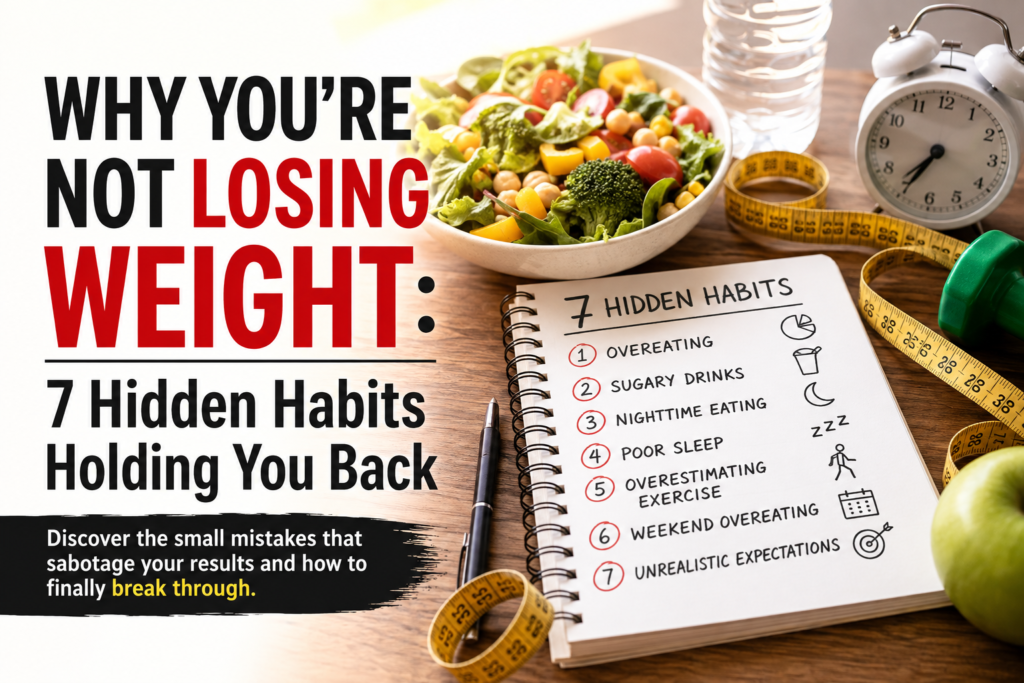
Why You’re Not Losing Weight: 7 Hidden Habits Holding You Back
Affiliate disclosure: This article contains an affiliate link. We may earn a commission if you purchase through it, at no additional cost to you.
You have reduced your portions, started exercising, avoided certain foods, and tried to stay consistent. Yet the scale barely moves or it drops briefly before climbing again.
At that point, it is normal to wonder: Why am I not losing weight despite dieting and exercise?
The answer is rarely one dramatic mistake. In many cases, several small habits quietly increase calorie intake, reduce daily movement, disturb sleep, intensify cravings, or make your plan difficult to maintain.
Understanding why you’re not losing weight requires looking beyond one meal or one workout. Your entire weekly routine matters, including your drinks, sleep, stress, weekends, portion sizes, movement, expectations, and any health conditions or medications that may affect body weight.
This detailed guide explains seven hidden habits that may be slowing your progress and offers realistic strategies for healthy, sustainable weight loss.
Table of Contents
Why Am I Not Losing Weight Even Though I Am Trying?
Body weight is influenced by the balance between the energy you consume and the energy your body uses. However, that does not mean weight management is simply a matter of willpower.
Several factors can affect your results:
- Food quantity and portion sizes
- Beverages and liquid calories
- Sleep quality
- Stress and emotional eating
- Daily movement
- Exercise habits
- Age
- Genetics
- Hormonal changes
- Prescription medications
- Medical conditions
- Your home and work environment
- How consistently you follow your routine
Your weight can also fluctuate from one day to another because of water retention, sodium intake, carbohydrate intake, digestion, hormonal changes, recent exercise, and the time of day.
A higher number on the scale does not automatically mean you gained body fat. It is more helpful to observe your average weight trend over several weeks.
One important reason why you’re not losing weight may simply be that your current calorie deficit is smaller than you think. Even nutritious foods, healthy drinks, restaurant meals, cooking oils, and weekend treats can add more energy than expected.
Before starting another extreme diet, examine the hidden habits below.
Affiliate disclosure: We may earn a commission if you purchase through this link, at no extra cost to you.
1. You Underestimate How Much You Eat
One of the most common explanations for stalled weight loss is eating slightly more than you realize.
This does not mean you are being dishonest. Portion sizes are genuinely difficult to estimate, especially when eating outside the home or using calorie-dense ingredients.
Foods that may contain more calories than expected include:
- Olive oil
- Ghee and butter
- Nuts
- Nut butter
- Cheese
- Dates and dried fruit
- Granola
- Avocado
- Sauces
- Salad dressing
- Restaurant meals
- Large smoothies
- Sweetened coffee
- Pastries and snacks
These foods do not necessarily need to be eliminated. The problem is that a small amount can provide significant energy.
Hidden eating that adds up
Extra calories often come from habits that barely feel like eating:
- Tasting food while cooking
- Finishing someone else’s leftovers
- Eating directly from a package
- Adding oil without measuring
- Taking several bites while standing in the kitchen
- Drinking coffee with cream and syrup
- Eating snacks while watching television
- Having larger portions on weekends
- Ordering restaurant meals without checking serving sizes
Each action may seem insignificant, but together they can remove the calorie deficit needed for weight loss.
Why portion distortion happens
Modern portions are often much larger than the amount one person needs at one meal.
Large plates, oversized restaurant servings, family-size packages, and unlimited refills can change your perception of a normal serving.
You may also eat more when:
- You are distracted
- You eat quickly
- You wait until you are extremely hungry
- Food is placed directly in front of you
- You use large plates and bowls
- You assume healthy food can be eaten without limits
- You eat from the original container
A nutritious food can still slow weight loss when the portion is consistently too large.
How to improve portion awareness
For seven to fourteen days, record everything you eat and drink.
Include:
- Meals
- Snacks
- Beverages
- Sauces
- Cooking oil
- Small bites
- Portion sizes
- Eating times
- Your hunger level
- Your mood
This record is not meant to create guilt. It is a tool to help you identify patterns.
You may discover that your meals are reasonable but your drinks are high in calories. You may notice that your weekday routine is consistent but your weekend portions are much larger.
Try these practical strategies:
- Put food on a plate instead of eating from the package.
- Measure oil with a spoon.
- Serve one portion before sitting down.
- Eat slowly and chew thoroughly.
- Pause before taking a second serving.
- Use smaller bowls for calorie-dense foods.
- Plan restaurant choices before arriving.
- Keep tempting snacks out of immediate sight.
- Avoid eating while scrolling or watching television.
One possible reason why you’re not losing weight is simply that your real portions are larger than the portions you imagine you are eating.
2. Your Drinks Contain More Calories Than You Realize
Many people pay close attention to food while ignoring beverages.
Liquid calories are easy to consume because they often do not create the same fullness as a complete meal.
Common sources include:
- Soda
- Sweetened tea
- Energy drinks
- Fruit drinks
- Packaged juice
- Large smoothies
- Sweetened coffee
- Flavored lattes
- Milkshakes
- Sports drinks
- Alcohol
- Coffee creamers
- Syrups
A beverage can be marketed as natural, energizing, vitamin-rich, or healthy and still contain a large amount of sugar and calories.
Why liquid calories are easy to miss
Drinks may be consumed while working, driving, studying, or watching television. Because they do not require chewing, they may not feel like a meaningful part of your daily food intake.
A sweetened coffee in the morning, an energy drink in the afternoon, juice with dinner, and several drinks during the weekend can add hundreds of calories.
Better drink choices for weight loss
You do not need to drink only plain water forever. However, calorie-containing drinks should be counted as part of your eating pattern.
Try these strategies:
- Make water your default drink.
- Choose unsweetened tea or coffee when suitable.
- Reduce flavored syrups gradually.
- Use less sugar in hot drinks.
- Choose a smaller cup.
- Check beverage labels carefully.
- Pay attention to serving size.
- Avoid drinking calories automatically between meals.
- Save sweetened drinks for occasional use rather than daily habits.
Some people also confuse thirst, boredom, tiredness, or dry mouth with hunger. Before eating an unplanned snack, pause and ask whether you need food, water, movement, or rest.
Can smoothies prevent weight loss?
Smoothies can contain nutritious ingredients, but they can also become high-calorie meals.
A large smoothie made with fruit, juice, milk, oats, nut butter, honey, and protein powder may provide more calories than expected.
To make smoothies easier to fit into a weight-loss plan:
- Use a reasonable serving size.
- Avoid combining several sweeteners.
- Do not add a large smoothie to a full meal.
- Choose fewer calorie-dense ingredients.
- Treat it as a planned meal or snack.
Poor beverage choices may explain why you’re not losing weight even when your food portions appear controlled.
3. You Eat Too Little During the Day and Overeat at Night
Many people believe that eating as little as possible during the day will produce faster results.
For some individuals, this creates the opposite outcome.
Skipping breakfast, delaying lunch, or surviving on coffee may reduce calories temporarily. By evening, hunger can become intense. At that point, it becomes harder to control portions and easier to choose foods that provide quick energy.
A common pattern looks like this:
- Eat very little in the morning.
- Skip or delay lunch.
- Feel tired and distracted in the afternoon.
- Arrive home extremely hungry.
- Eat quickly while preparing dinner.
- Take a large portion.
- Continue snacking after the meal.
- Feel guilty.
- Promise to restrict more the next day.
This is not necessarily a discipline problem. Your eating schedule may simply be too restrictive.
Signs that daytime restriction is causing nighttime eating
You may notice:
- Constant food thoughts in the evening
- Eating while cooking dinner
- Taking several portions
- Continuing to snack after feeling full
- Craving sweets late at night
- Eating automatically in front of the television
- Going to bed uncomfortably full
- Skipping meals the next day to compensate
How to stop overeating at night
Start by creating a more realistic daytime routine.
Consider:
- Eating regular meals.
- Including satisfying foods.
- Planning a snack when dinner will be late.
- Avoiding extremely long periods without food.
- Preparing dinner ingredients in advance.
- Deciding what you will eat before becoming very hungry.
- Eating at a table rather than while standing.
- Creating a clear kitchen-closing routine.
- Brushing your teeth after your final planned meal.
Before eating, ask yourself:
- Am I physically hungry?
- Did I eat enough earlier today?
- Am I tired?
- Am I stressed?
- Am I bored?
- Is the food simply visible?
- Would sleep, movement, or relaxation help more?
There is nothing automatically wrong with eating at night. The concern is repeated, unplanned eating that consistently exceeds your needs.
Is intermittent fasting stopping your progress?
Intermittent fasting works for some people because it creates a clear eating schedule. It is not suitable for everyone.
It may be counterproductive when it causes:
- Extreme hunger
- Low energy
- Irritability
- Binge-like eating
- Poor workout performance
- Constant food thoughts
- Large evening meals
- Difficulty sleeping
The best eating schedule is one you can maintain safely and consistently.
Restricting too aggressively during the day may be another reason why you’re not losing weight, especially when it leads to uncontrolled nighttime eating.
Ready to take the next step in your weight-loss journey? Explore this weight-management solution and review the ingredients, benefits, pricing, and customer offer before deciding whether it fits your goals.
Discover the Weight-Loss Solution Here
Affiliate disclosure: We may receive a commission from qualifying purchases. Individual results vary.
4. You Are Not Getting Enough Quality Sleep
Sleep is often ignored in weight-loss plans, but it strongly influences appetite, energy, food choices, stress, and physical activity.
When you are tired, you may:
- Crave sugary foods
- Prefer larger portions
- Drink more caffeine
- Skip exercise
- Eat for quick energy
- Spend more time awake and available to snack
- Avoid meal preparation
- Make more impulsive decisions
Poor sleep may help explain why you’re not losing weight even when your meals appear relatively controlled.
Hidden sleep habits that affect weight loss
Common problems include:
- Scrolling on your phone in bed
- Drinking caffeine late in the day
- Going to bed at inconsistent times
- Working late every night
- Eating a very large meal before bed
- Drinking alcohol to fall asleep
- Sleeping with the television on
- Keeping the bedroom too warm or bright
- Ignoring loud snoring or breathing interruptions
- Sleeping very little during the week
How to improve sleep for better weight management
Try creating a simple evening routine:
- Choose a consistent wake-up time.
- Reduce screen use before bed.
- Keep the bedroom dark and quiet.
- Avoid caffeine late in the day.
- Do not use alcohol as a sleep solution.
- Get natural light earlier in the morning.
- Keep stressful work away from your bed.
- Avoid arriving at bedtime extremely hungry.
- Practice deep breathing or gentle stretching.
- Discuss persistent sleep problems with a professional.
You can also read this guide about nighttime awakenings:
Seek professional advice when poor sleep includes:
- Loud snoring
- Gasping
- Breathing pauses
- Severe daytime sleepiness
- Morning headaches
- Ongoing insomnia
- Difficulty functioning during the day
Improving sleep will not automatically produce dramatic weight loss, but it can make healthy choices easier to maintain.
5. You Overestimate the Calories Burned During Exercise
Exercise supports heart health, muscle strength, mobility, mood, fitness, and long-term weight management.
However, people often overestimate how many calories a workout burns.
Fitness watches, treadmills, and online calculators provide estimates, not exact measurements.
A common cycle is:
- Complete a difficult workout.
- Assume you burned a large number of calories.
- Reward yourself with a high-calorie meal.
- Drink a calorie-heavy recovery beverage.
- Move less during the rest of the day.
- Consume more energy than the workout used.
This does not mean exercise is useless. It means exercise should not be treated as permission to eat without awareness.
Exercise compensation
After a hard workout, you may unconsciously:
- Sit more
- Skip your evening walk
- Take the elevator
- Feel hungrier
- Increase meal portions
- Order takeout
- Drink a sugary beverage
- Spend the rest of the day resting
The result may be less weight loss than expected.
A better exercise mindset
Exercise for health, strength, energy, and consistency—not as punishment for eating.
A balanced routine may include:
- Brisk walking
- Cycling
- Swimming
- Dancing
- Strength training
- Resistance-band exercises
- Home workouts
- Hiking
- Mobility exercises
- Short activity breaks
Choose activities that match your current fitness level and health.
Strength training for weight loss
Many people focus only on cardio. Strength training can also support weight management by helping maintain muscle and physical function.
A beginner routine may include:
- Chair squats
- Wall push-ups
- Resistance-band rows
- Step-ups
- Light carrying exercises
- Hip hinges
- Gentle core movements
Start gradually and seek professional guidance when you have pain, balance problems, medical conditions, or a long history of inactivity.
Increase everyday movement
Formal exercise is only one part of daily activity.
You can also move more by:
- Walking during phone calls
- Standing regularly
- Taking the stairs when safe
- Parking farther away
- Walking after meals
- Doing household tasks
- Taking short movement breaks
- Reducing long periods of sitting
Exercising consistently but overestimating calories burned could be another reason why you’re not losing weight.
6. Your Weekends Erase Your Weekday Progress
You may follow a structured plan from Monday through Friday and then abandon it during the weekend.
One relaxed meal is unlikely to destroy your progress. The problem begins when one meal becomes an entire weekend of overeating.
A typical weekend may include:
- Friday-night takeout
- Sweetened drinks
- Saturday restaurant breakfast
- Large lunch
- Snacks during entertainment
- Dinner with dessert
- Sunday brunch
- Alcohol
- Less movement
- Sunday-night comfort food
By Monday, you return to a strict routine and wonder why the scale is not changing.
Why weekend overeating happens
Weekends often have:
- Less structure
- More social events
- Restaurant meals
- Family gatherings
- Alcohol
- Later sleeping times
- More time near food
- Boredom
- An “I deserve it” mindset
You may also label foods as good or bad. After eating one food you consider “bad,” you may decide the entire day is ruined and continue overeating.
How to stay on track during weekends
Keep a few anchor habits
Maintain two or three basic habits:
- A regular first meal
- A planned walk
- Water with meals
- A normal sleep schedule
- A reasonable restaurant portion
Choose your priorities
Decide what you really want to enjoy.
You might choose dessert but skip the appetizer, or enjoy a restaurant meal without ordering several calorie-containing drinks.
Do not arrive extremely hungry
Eating almost nothing before an event can make overeating more likely.
Have a normal meal or planned snack earlier.
Return to your routine immediately
One larger meal does not require waiting until Monday.
Return to your normal plan at the next meal.
Be careful with alcohol
Alcohol provides calories and can weaken food-related decision-making. Mixed drinks may also contain juice, soda, or syrup.
Create non-food rewards
Reward progress with:
- New walking shoes
- A book
- A nature outing
- Comfortable clothing
- A massage
- A relaxing bath
- Time with a friend
- A new hobby
- A motivational playlist
Food can be enjoyable without becoming your only source of reward.
Unstructured weekends may be the hidden reason why you’re not losing weight despite following your plan during the week.
7. You Expect Fast Results and Change Plans Too Often
The final hidden habit is impatience.
You follow a plan for one week, see little change, and decide it is not working. Then you switch diets, remove another food group, buy another product, or start a more extreme routine.
This creates constant change without enough consistency to evaluate your progress.
Examples include:
- Switching between low-carbohydrate and low-fat eating
- Starting and stopping intermittent fasting
- Trying detox plans
- Removing foods without a clear reason
- Buying several supplements
- Following short challenges
- Abandoning the plan after a temporary plateau
- Comparing your body with someone online
- Expecting the scale to drop every morning
Why weight-loss plateaus happen
Progress may slow because:
- Your body now weighs less and requires less energy.
- Portions gradually became larger.
- Daily movement decreased.
- Water retention temporarily hides fat loss.
- Sleep became worse.
- Stress increased.
- Your workout routine stopped challenging you.
- Weekend eating changed.
- A medication or medical condition is affecting weight.
A plateau does not automatically mean failure. It may simply mean that your routine needs a careful review.
How long should you follow a plan?
A few days are not enough to judge a realistic lifestyle strategy.
Evaluate your progress over several weeks while tracking:
- Average body weight
- Waist measurement
- Clothing fit
- Energy
- Fitness
- Strength
- Hunger
- Sleep
- Consistency
- General health
How to break a weight-loss plateau
Ask:
- Have my portions increased?
- Am I drinking more calories?
- Are weekends less structured?
- Am I sleeping enough?
- Has my daily movement decreased?
- Am I stress eating?
- Am I eating more restaurant meals?
- Could medication affect my weight?
- Should I speak with a healthcare professional?
- Is my goal realistic?
Change one or two things, then monitor the result.
Do not respond to every plateau with an extreme diet.
If you are still wondering why you’re not losing weight, review your complete weekly routine instead of focusing on one meal, one workout, or one number on the scale.
Other Reasons You May Not Be Losing Weight
Lifestyle habits are important, but they are not the only possible explanation.
Medical conditions, medications, hormonal changes, pain, mobility limitations, and life stages can influence appetite, activity, fluid balance, and body weight.
Possible factors include:
- Thyroid disorders
- Polycystic ovary syndrome
- Menopause
- Depression
- Chronic stress
- Sleep apnea
- Chronic pain
- Mobility limitations
- Diabetes
- Fluid retention
- Corticosteroids
- Certain psychiatric medications
- Some diabetes medications
- Other prescription drugs
Never stop prescribed medication because you suspect it is affecting your weight. Speak with the prescribing healthcare professional.
Seek medical advice when:
- Weight changes suddenly.
- You experience severe fatigue.
- You have swelling.
- You become short of breath.
- Your menstrual cycle changes significantly.
- You experience excessive thirst or urination.
- You have persistent constipation.
- You have strong cold intolerance.
- You are pregnant or breastfeeding.
- You have diabetes, heart, liver, or kidney disease.
- You are considering weight-loss medication or surgery.
Weight management is not only a test of discipline. Professional support can be an appropriate and useful part of care.
How to Create a Sustainable Weight-Loss Plan
A good plan should help you build habits you can repeat. It should not require starvation, extreme restriction, or a completely separate life.
Step 1: Choose realistic goals
Instead of saying, “I need to lose all the weight quickly,” choose a measurable habit goal.
Examples:
- Walk for 20 minutes four days per week.
- Replace one sugary drink each day.
- Prepare dinner at home three times per week.
- Record meals for seven days.
- Go to bed 30 minutes earlier.
- Eat one meal without a screen daily.
- Reduce restaurant meals.
Behavior goals are easier to control than scale goals.
Step 2: Create simple meals you can repeat
You do not need a new recipe every day.
Choose several meals that fit:
- Your culture
- Your budget
- Your schedule
- Your preferences
- Your medical needs
- Your cooking ability
A sustainable meal should be satisfying, practical, and easy to prepare repeatedly.
Step 3: Plan for difficult days
Think ahead about:
- Work lunches
- Travel
- Family events
- Busy evenings
- Restaurant meals
- Emotional stress
- Holidays
- Lack of sleep
- Unexpected schedule changes
Prepare backup options such as:
- A quick meal
- A portable snack
- A ten-minute walk
- A short home workout
- A planned restaurant choice
- A return-to-routine rule
A plan that works only on perfect days is not sustainable.
Step 4: Track more than body weight
The scale is only one measurement.
Also track:
- Waist circumference
- Clothing fit
- Energy
- Sleep
- Hunger
- Digestion
- Strength
- Mobility
- Mood
- Consistency
- Blood pressure when appropriate
- Blood glucose when medically appropriate
You may be making progress even when body weight changes slowly.
Step 5: Improve your environment
A supportive environment reduces the number of difficult decisions you must make.
Try:
- Keeping planned foods visible
- Storing tempting foods out of sight
- Preparing ingredients in advance
- Shopping with a list
- Avoiding grocery shopping while extremely hungry
- Keeping water accessible
- Placing walking shoes near the door
- Scheduling workouts
- Asking your family for support
- Disabling repeated food-delivery notifications
Step 6: Stop treating setbacks as failure
One unplanned meal does not erase your progress.
Instead of saying, “I ruined everything,” ask:
- What happened?
- Was I tired?
- Was I stressed?
- Was I unprepared?
- Was I extremely hungry?
- What can I change next time?
- What is the next helpful action?
The next helpful action may simply be:
- Eating your next normal meal
- Taking a short walk
- Drinking water
- Sleeping on time
- Preparing tomorrow’s food
You do not need to punish yourself.
Identifying why you’re not losing weight allows you to make targeted changes instead of repeatedly starting another extreme diet.
Should You Use a Weight-Loss Supplement?
Weight-loss supplements are often marketed for:
- Fat burning
- Appetite control
- Metabolism support
- Energy
- Blood sugar support
- Faster results
Marketing language is not the same as guaranteed effectiveness.
Before buying any supplement, ask:
- What are the ingredients?
- What dose is used?
- Is the complete formula clearly listed?
- Could it interact with my medication?
- Is it appropriate for my health conditions?
- Are the testimonials typical?
- Does the seller promise unrealistic results?
- Is there a clear refund policy?
- Have I discussed it with a healthcare professional?
A supplement should not replace nutrition, movement, sleep, or medical care.
Before choosing any weight-management product, compare its ingredients, possible side effects, pricing, and refund terms. You may also read our detailed CitrusBurn review for another example of how to evaluate a weight-loss supplement carefully.
Pregnant or breastfeeding individuals and people taking medication or managing diabetes, kidney disease, liver disease, or heart disease should be especially cautious.
Explore the Weight-Management Offer
Readers interested in the product associated with this article may review the official offer below:
<a href=”https://0b32bezj48ua91892isr1d63-y.hop.clickbank.net” target=”_blank” rel=”sponsored nofollow noopener noreferrer”><strong>Discover the Weight-Management Offer</strong></a>
Affiliate notice: We may earn a commission if you purchase through this link. Individual results vary, and no supplement guarantees weight loss.
Frequently Asked Questions
Why am I exercising but not losing weight?
You may be consuming more calories than expected, overestimating workout calories, eating more after exercise, moving less during the rest of the day, retaining water, or experiencing a medical or medication-related factor.
Exercise can still improve fitness, strength, mood, and health even when the scale changes slowly.
Why am I eating healthy but not losing weight?
Healthy foods can still provide more calories than your body needs. Large portions of oils, nuts, cheese, dried fruit, restaurant meals, and smoothies may slow progress.
Track portions honestly for a short period.
Why am I in a calorie deficit but not losing weight?
Possible explanations include inaccurate tracking, underestimated portions, hidden drink calories, temporary water retention, less movement, weekend overeating, or an overestimated calorie target.
If the issue continues, consult a qualified professional.
Can lack of sleep prevent weight loss?
Poor sleep can increase cravings, reduce activity, intensify hunger, and make food decisions more difficult. It may indirectly slow your progress.
Can stress make me gain weight?
Stress may affect sleep, appetite, emotional eating, movement, and meal planning. Stress management does not replace a weight-loss plan, but it can make the plan easier to follow.
How do I lose belly fat?
You cannot reliably choose where your body loses fat first.
Overall weight loss may gradually reduce abdominal fat, but genetics, hormones, age, and sex influence where body fat is stored.
Avoid products that promise to target belly fat specifically.
What is the best diet for weight loss?
The most useful diet is one that:
- Fits your health needs
- Creates an appropriate calorie deficit
- Provides adequate nutrition
- Is affordable
- Respects your preferences
- Works in social situations
- Can be maintained long term
No single plan is perfect for everyone.
How fast should I lose weight?
Gradual progress is generally easier to maintain than rapid loss. Results depend on your starting point, health, eating pattern, activity, and consistency.
Do I need to count calories?
Not everyone needs to count calories permanently.
Short-term tracking can help identify portion mistakes, liquid calories, and eating patterns. Others may prefer structured meals or guidance from a qualified professional.
How do I know whether my plan is working?
Evaluate several weeks of progress using:
- Average weight trend
- Waist measurement
- Clothing fit
- Energy
- Fitness
- Hunger
- Sleep
- Consistency
- Health indicators
A plan is not truly successful if it produces rapid results but cannot be maintained.
More Health and Wellness Resources
Continue exploring related guides from our website:
- Why Do I Keep Waking Up at 3 AM? Causes and Solutions
- CitrusBurn Review: Ingredients, Side Effects, Price and Results
- Parkinson’s Disease Care at Home: Nutrition, Safety and Daily Support
Final Thoughts: Consistency Matters More Than Perfection
When weight loss is not happening, it is tempting to blame yourself, remove more foods, or search for another dramatic solution.
Start by reviewing the habits that shape your entire week:
- Portions larger than expected
- Sugary drinks
- Heavy restriction followed by nighttime eating
- Poor sleep
- Overestimating exercise
- Unstructured weekends
- Unrealistic expectations
- Medical or medication-related factors
You do not need to fix everything at once.
Choose the habit that affects you most and work on it consistently for two weeks. Observe what changes, then add another improvement.
Understanding why you’re not losing weight helps you stop guessing and begin making focused, realistic changes.
Your progress does not need to look dramatic to be meaningful.
A planned meal matters.
A short walk matters.
Better sleep matters.
A controlled portion matters.
Returning after a setback matters.
The goal is not to follow a perfect diet for a few days.
The goal is to create a healthier way of living that you can continue.